
4min read
Omega is one of the Swiss watchmaking industry’s most innovative firms. Already very early in Omega’s history innovations were treated scientifically and the introduction of novel horological features were analysed, adapted and introduced quite consistently, but always taking ownership of the innovations and diversifying them following different approaches.
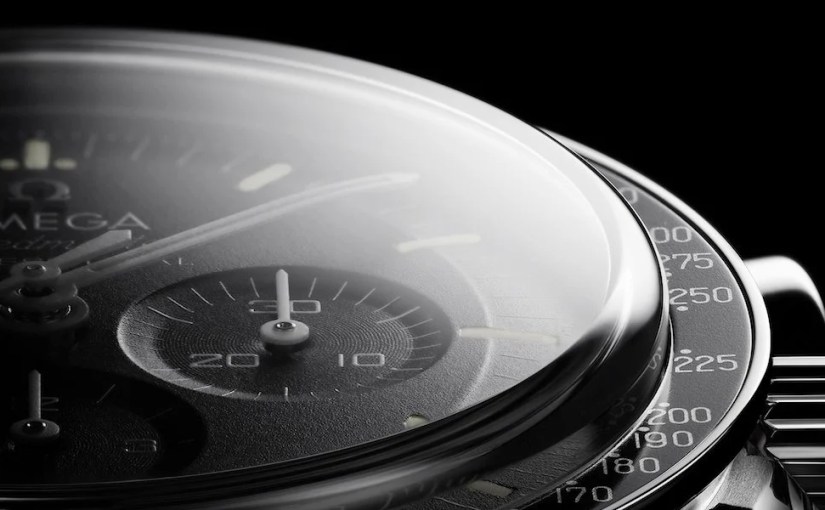
Also other brands, such as as Rolex, invested in novel features for wrist watches, optimising precision, the self winding system and waterproofness of cases, but mostly buying patents of systems invented by external independent manufacturers (1). Omega’s innovative spirit was challenged by the collaboration with specialised professionals, especially during the 1960s. One important confirmation of the quality of Omega’s developments came with the selection of the ‘Speedmaster’ model by NASA to become part of the NASA Astronauts hardware starting 1965 and thus initiating a long term collaboration and a specific, secretive project series called ‘Alaska‘. The space related developments diversified initiating also a collaboration with ESA (European Space Agency) for the development of the Mars watch in the mid 1990s.
Not only space related horological research was occupying Omega’s R&D department at this period, the increase interest in marine research and the exploitation of marine resources with the subsequent augmenting need for watches for professional divers, triggered the development of highly specialised watches, compatible with diving at great depths without the need of helium release valves, as used by other manufacturers. Omegas developments for divers nicknamed ‘Ploprof (Seamaster 1000 and Seamaster 600)’ for ‘PLOngeur PROFessionel’ were even described as being more air tight than an Apollo space capsule or a submarine.
The developments were not limited to one specific feature satisfying specific professional missions, also new materials like CERMET and after the emergence of battery driven calibers, also futuristic watch movement systems were tested for the different uses. As in the 1970s jewellery and fashion experienced a democratisation as a side effect of the student revolts in 1968, Omega followed the trend of ‘lifestyle’ time pieces and ‘jewellery watches’ by collaborating with highly successful jewellers such as Andrew Grima (6).
In parallel to watch developments for professionals, also the race for the most precise time pieces was tackled by Omega, researching the use of the tourbillon for wrist watches already in 1947, adhering early to the research of battery driven calibers and being the first firm worldwide to commit to the quartz system for wrist watches in 1956 until the development of the only wrist watch certified ‘Marine Chronometer‘ and still holding the record for the most precise non – thermocompensated wristwatch since 1974 (7).
The research into precision horology was backed by the use of Omega’s developments for timing sport events, which granted Omega the honour of providing the official timing of the Olympic Games, with some interruptions, since 1932 (2).
The collaboration with Tissot as joint SSIH (Société Suisse pour l’Industrie Horlogère) since 1930, integrating Lemania in 1932, permitted to exchange and develop expertise in various domains, taking advantage of the research and developments in chronograph movements (Lemania) and material research (Tissot) giving rise to iconic models throughout the 20th century. The collaboration agreement foresaw Omega’s concentration on the luxury watch segment, whereas Tissot’s mission was to concentrate on the medium price range segment (3). The number and variety of collaboration partners increased with the creation of SSIH-ASUAG in 1983 and later the Swatch Group in 1998. The collaboration within the latter has permitted to further develop and industrialise the Co-Axial escapement invented by George Daniels in 1974, and rejected by many other Swiss watchmaking firms, until Omega agreed to adapt the system and introduce it for their calibers starting 1999. The same year the Co-Axial escapement will be featured in the new and highly successful Seamaster 300 line, now at the wrist of the most illustrious secret agent in movie history – James Bond. One of the most recent successful collaborations includes the development of Omega’s ‘spirate’ hairspring developed by the CSEM for Omega in 2023 (4, 5).
These and many more examples testimony of Omega’s perpetual search for optimising the horological systems for professional and non – professional uses and the courage of embracing modern and even primarily rejected horological advances.
Ref.:
- Donzé J.-Y., La Fabrique de l’Excellence, Histoire de Rolex; Collection Les Routes de l’Histoire, 2024
- Swatchgroup
- Wikipedia – SSIH
- Watchesbysjx
- Personal communication with CSEM engineers involved in the development
- Bulag & Sons
- Omegapassion – Megaquartz
 Omega Prototypes